JEARRARD'S HERBAL
That's enough introduction - on with the plants!
To navigate this site use the links above or the detailed links at the bottom of this page.
... out in the garden.
27th September 2026
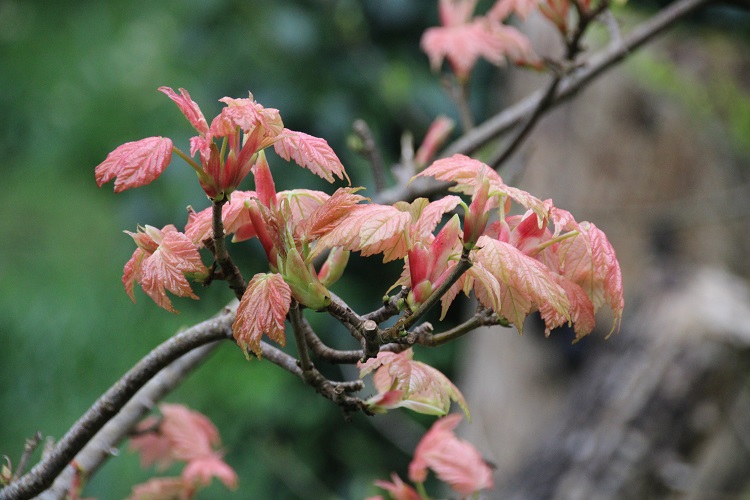
Camellia sasanqua 'Rainbow' .
The garden has slumped into autumn like an ageing gardener into an armchair. It has been an almost perfect autumn week, moderate and moist with enough sparkling sunshine to lift the spirits.
It has been perfect in a very quiet way, without trumpets and bells, just the gentle process of summer slipping into winter.
I was happy in my simplistic view until somebody mentioned autumn storms. A bit of motivation to start burning the debris from Storm Goretti before the next lot of trees come down.
I was walking up to the first bonfire of the season and my feet were crunching the fallen leaves and the subtle touch of autumn was very real.
Further on in the garden, the equally subtle touch of Camellia sasanqua 'Rainbow' brought with it visions of winter and then of spring. There are two camellias in flower in the garden at present
but soon they will be the dominant force.
27th September 2026
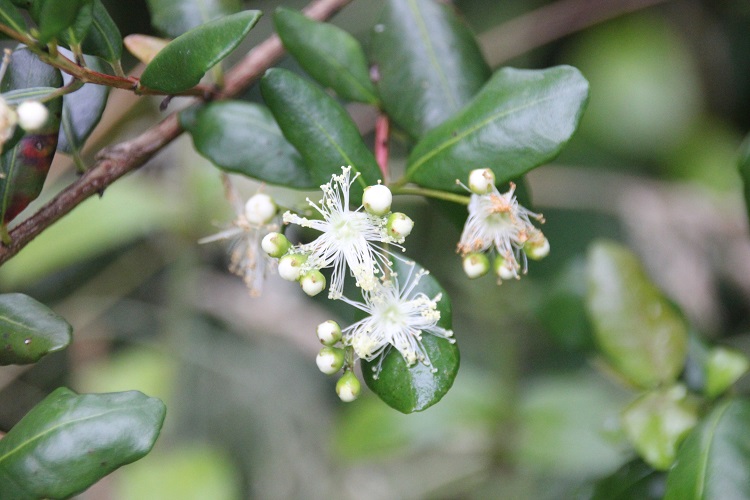
Chlorophytum krookianum .
The ending of the season has been marked by Chlorophytum krookianum. This is my broad leaved form and I have wanted more of it for a long time.
Unfortunately it divides very slowly and it doesn't set seed. It has been waiting for a long, hot year. I have two seed capsules forming and I am watching them intently,
determined to catch them before the seed is shed.
Last time I was watching a seed pod form in this part of the garden - Narcissus 'Rijnvelds Early Sensation' - it was chewed off by a deer as it ripened.
I am watching these pods with some trepidation. I don't think deer eat Chlorophytum but it may be that the seed pods are unexpectedly delicious.
27th September 2026
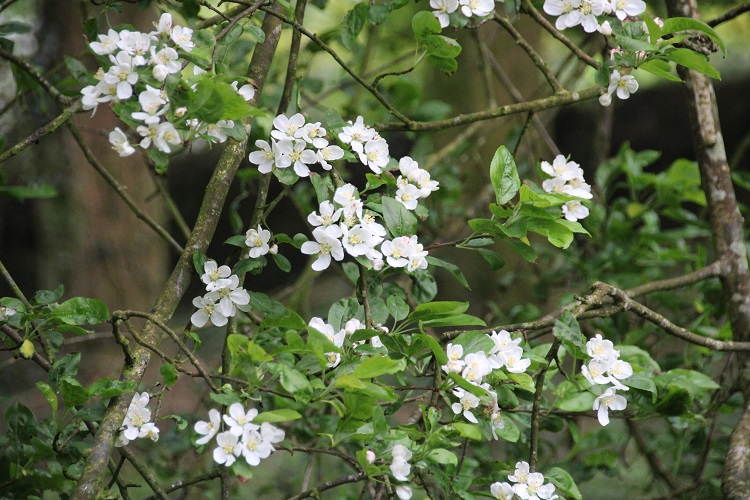
Colchicum 'Waterlily' .
It has been a year of anticipation and promise for Colchicum. I planted a few new cultivars last year and C. autumnale 'Album' and 'The Giant'
both managed to flower. Hopefully they will be stronger next year. C. x agrippinum has been fantastic, flowering profusely for weeks
and C. autumnale 'Alboplenum has forgiven me for splitting it last year and given a fine display.
The big question mark hung over the head of C. 'Waterlily'. I have been concerned for a couple of years that they are too dry and shaded under the trees.
Storm Goretti blew through in January and eased the problem. There is now more light and less competition. I was hoping that the plants would have a good growing season as a result
and that it would show in the autumn flowering. In the event the drought of summer stopped growth rather early but I think the Colchicum have prospered.
They are certainly looking good, even if the woodland floor is a little unkempt. There wasn't time for the annual tidy in August so they will have to cope for another year.
I don't think it will matter.
27th September 2026
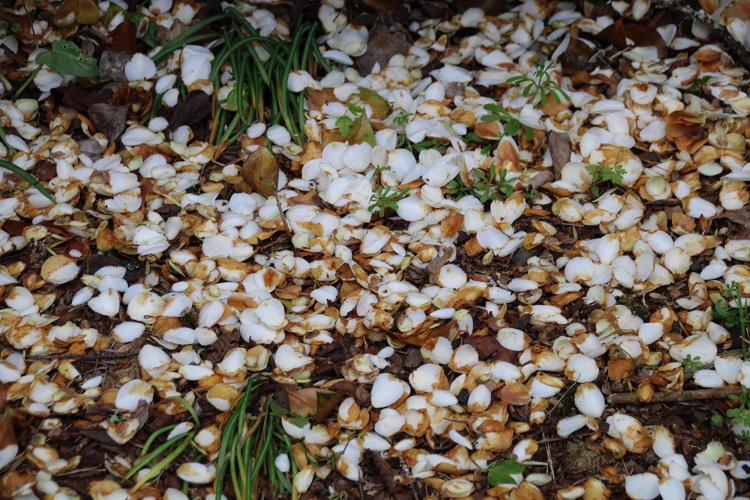
Gladiolus carmineus .
Down in the Nerine house buds are burgeoning. I was worried that it would be a sparse year for Nerine flowers, but I think it is going to be ok.
The Nerine house gets shaded from the east by a row of sycamore trees and from time to time they have to be trimmed back to prevent them shading the bulbs.
It is another job that didn't get done this year. The early nerine are looking promising and the next few weeks will show how the later ones have fared.
While the excitement is building in the greenhouse, Gladiolus carmineus has opened a few flowers. It fits very well into the Nerine growth cycle.
I think it would like to be a little moister during summer, but it is increasing and flowering reliably.
Another plant that I would like to grow more of from seed and which doesn't set any. In this case I think I need to pollinate by hand.
Hopefully deer aren't going to be a problem in the greenhouse.
To find particular groups of plants I grow, click on the genus name in the table above. Click on the "Index" box at the top of the page for the full list.
I have a lot of good intentions when it comes to updating this site, and I try to keep a note
about what is going on, if you are interested.
If you want to contact me, the address is incompetentjohnMONKEYjohnjearrard.co.uk
When typing the address in, please replace MONKEY with the more traditional @ symbol! I apologise for the tiresome performance involved, but I am getting too much
spam from automated systems as a result of having an address on the front page.
Perhaps my MONKEY will fool them.