JEARRARD'S HERBAL
14th June 2026
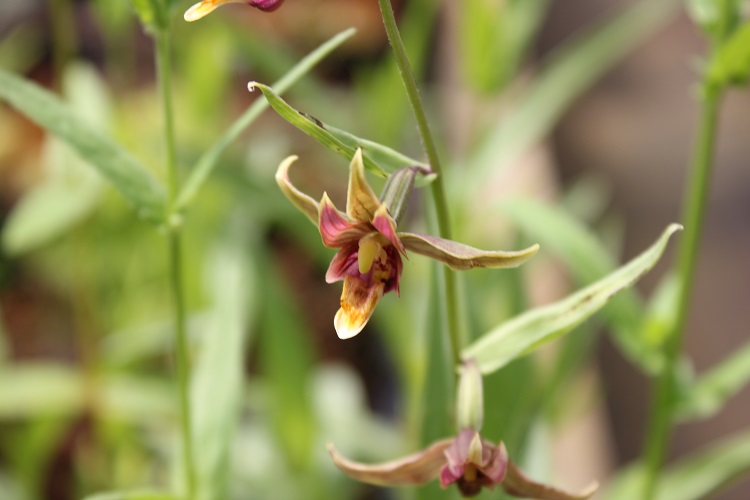
Epipactis gigantea .
Another cold week controlled activity in the garden - that and the fact that I went to Sheffield. The end of the week has warmed again, the greenhouse was hot when I returned
and watering had to be the first priority. Plants that were fattening buds when I left are in full bloom. The Disa have started to make a display though there is a lot more to come.
Over the last couple of years I have been acquiring Epipactis when they have been available. Some have done really well in the same conditions as the Disa
others have been less of a success. Epipactis gigantea has been wonderful, flowering and increasing freely. It isn't at its best this year because I didn't have time to divide it
but I am sure that it will return to form if I split it in the winter.
I haven't been as successful with E. royleana which I have tried twice without managing to establish it. I was more impressed by the behaviour of the hybrid E. Catalina
(E. gigantea x E. royleana which has flowered freely in its first year.
14th June 2026
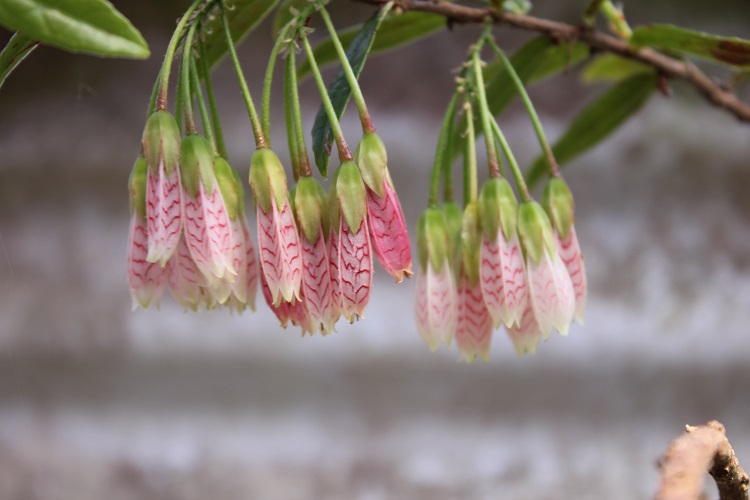
Agapetes 'Ludgvan Cross' .
Plants are peculiar things. Twenty years ago Agapetes 'Ludgvan Cross grew in the greenhouse with great vigour. Since then it has declined and I have tried several new locations in the hope of keeping it cheerful.
The last attempt was planted in the ground in the Hedychium house and although it survived for several years, it was clearly not happy.
I had tried it with the hedychiums as a halfway-house to planting it outside. I have never seen it prospering in a garden in Cornwall, which should have been a warning,
but I was up for a challenge.
Last year its general air of misery persuaded me to lift it and pot it up. It had almost no root and was clearly too dry. Since then it has done well in a bark based mix
among the Clivia and the flowers have lost the air of desperation that has haunted them for several years.
14th June 2026
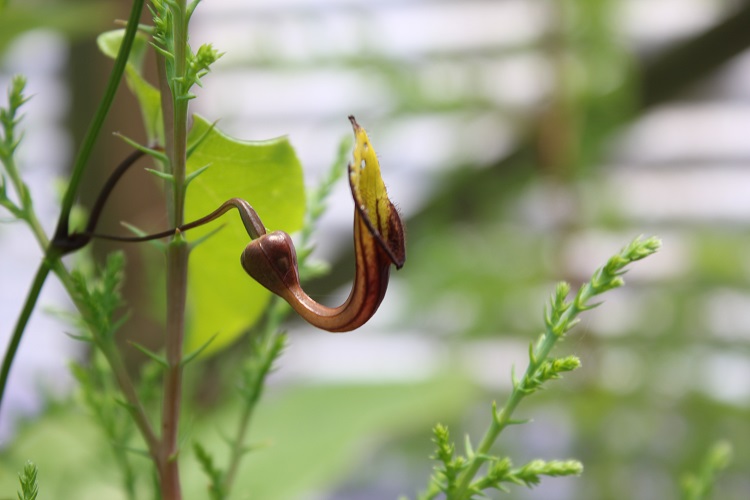
Aristolochia sempervirens .
Other plants have had mixed fortunes for other reasons. Aristolochia sempervirens grew so vigorously in the greenhouse that I was (almost) forced to plant it out.
It went in under the lower branches of a Crinodendron and was never very happy. One spring in a burst of useful weeding to give it more space, I inadvertently
grabbed the best stem and yanked it. The plant never recovered though I still look at the space with hope.
Retrospectively it needed more sun, more warmth and less yanking. Thanks to my partner I have another seedling clambering about on the bench and I have identified a warm dry spot to plant it.
I have even gone as far as to buy a support for it to grow through. It will be a triumph, or I will be begging for more seed.
14th June 2026
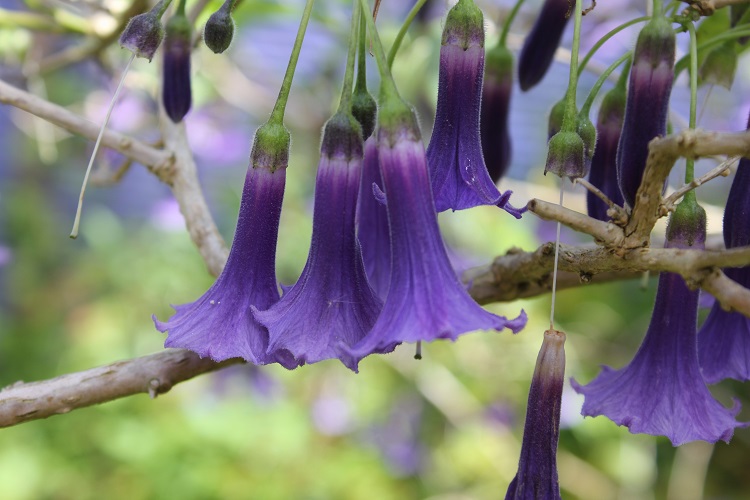
Eriolarynx australis .
My Eriolarynx grows in the Hedychium house. Everybody tells me that it is hardy but I don't see many growing in gardens and those that I see seem to be replaced after a hard winter
(we will get one of those, it will be salutary). In the Hedychium house it seems to be happy and that is good enough for me. I keep promising myself that I will root
cuttings and spread them around but the intention and the action have yet to coincide. I have a brand new propagator, it would be an excellent thing to test it.
My form is darker than the usual plant seen in gardens, which lean to a cleaner blue while mine is distinctly purple. I would like to grow the paler form as well, but seed didn't germinate.
Light or dark, inside or out, I am always amazed during the flowering season.