 |
One of the most vigorous species of Zephyranthes, I first met it being grown outdoors in Berkshire
(not entirely successfully) and I have grown it ever since. The commonest form seen in the UK is sterile
and believed to be a triploid. In recent years seed has been re-introduced from South America
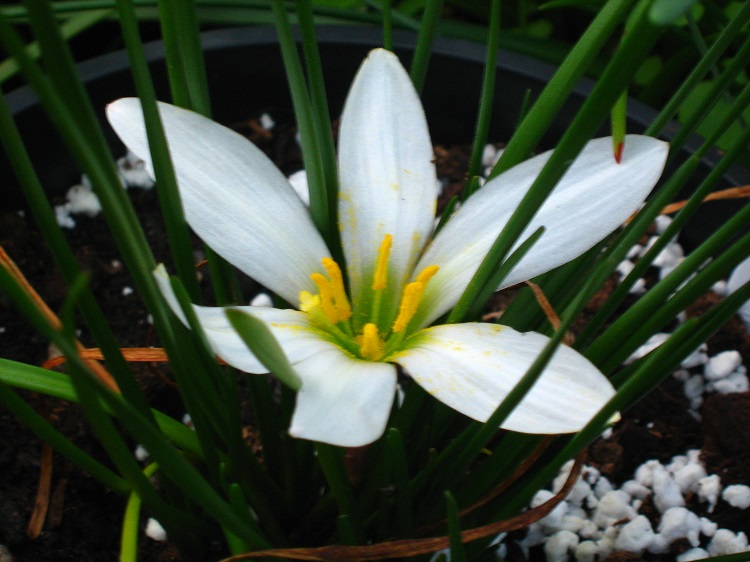
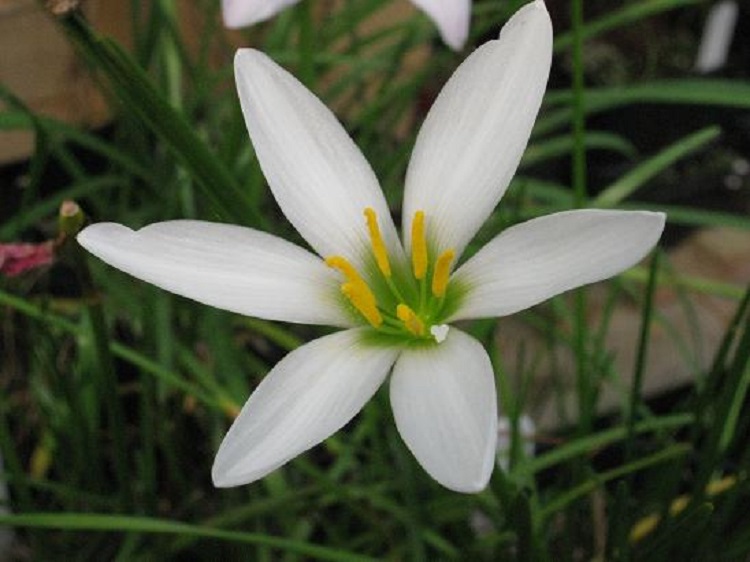
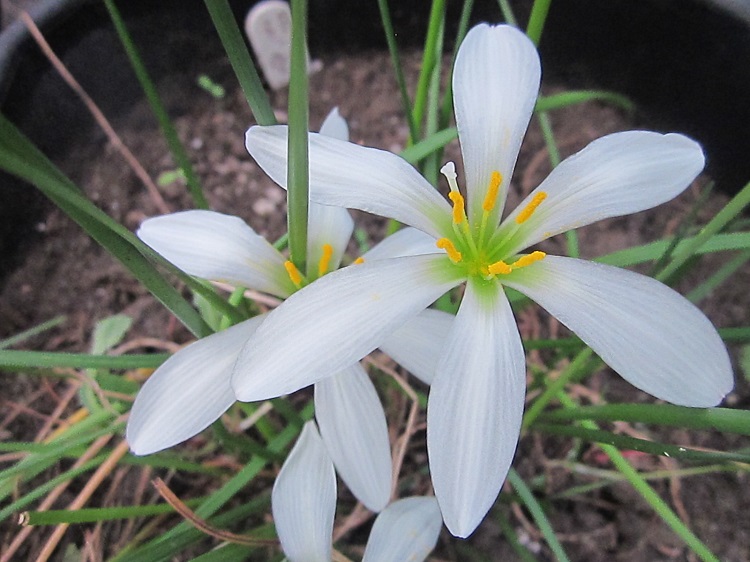
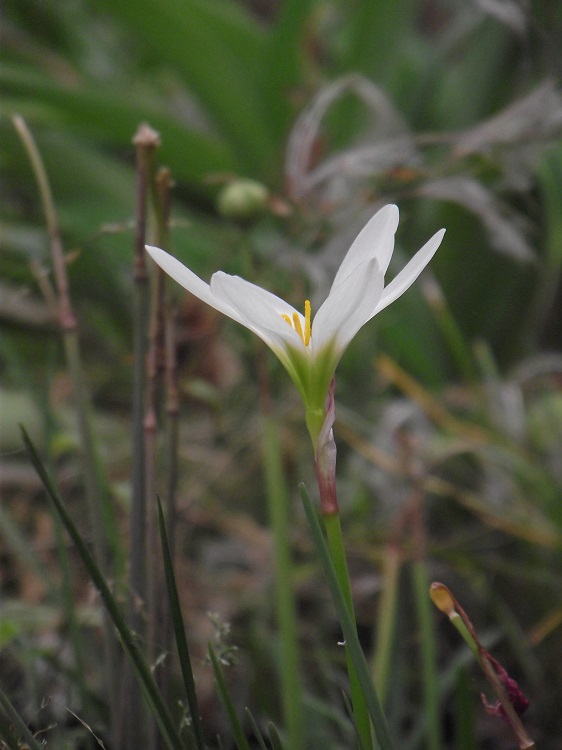
(Argentina, Paraguay, Uraguay and Chile) and fertile plants are now available. I have never grown it outside. In a pot it produces an occasional flower, mostly in the summer but they can appear at almost any time if the mood takes it. I have never seen a strong flowering display outside, mostly it makes an untidy pile of spindly broken leaves but in a warm sunny position with some moisture, it can be vigorous. Plant Delights say: "This wonderful, semi-evergreen rain lily just can't be beaten as an easy-to-grow garden performer. The round, narrow, dark green foliage makes a thick clump. Beginning in summer, 1" tall, pure white, star-like flowers with dramatic golden stamens (pollen holders) arise just above the foliage. Zephyranthes candida makes a great specimen clump, but when used in a mass or for a border, it is simply indescribable! Although quite durable, Zephyranthes candida performs best in a rich or very moist site." Edulis say: "Peruvian Swamp Onion. One of the most useful and forgiving members of a genus better known for its tender temperament, Zephyranthes candida is a charming little bulb from South America with an almost absurd ability to produce fresh flowers after rain. Native to Argentina, Uruguay, Paraguay and southern Brazil, it forms neat clumps of narrow, glossy, dark-green leaves, from which arise delicate, upright flowers of pure white, each with a surprisingly elegant greenish throat. The flowers appear from late summer into autumn, often in succession, and are particularly welcome when much of the herbaceous border is beginning to look distinctly tired." San Marcos Growers say: "Zephyranthes candida is native to marshes and bogs from Paraguay, Chile, Uruguay and Argentina. In Argentina it lines both shores along the Rio de la Plata (River of Silver) and it is these flowers that gives the river this name. The name for the genus has Greek origins as Zephyrus is the name for the Greek god of the west wind and 'anthos' means "flower" so a literal translation is "flowers of the western wind" and is in reference to the way the flowers on their slender stems dance in a wind. The specific epithet 'candida' means "pure white' or "shining white", referring to the color of the flowers. The common names used include Fairy Lily, Peruvian swamp-lily, White Zephyr Lily and Rain Lily, for their habit of flowering after rains, and it apparently is also called Dwarf Onion when sold for aquarium or terrarium use. This plant was first described by John Lindley in 1823 as Amaryllis candida but was transferred to its current genus in 1826 by William Herbert who later suggested that it might best be segregated to another genus for its many differences to other Zephyranthes species. In the past it has since been renamed to Plectronema candida (1838), Argyropsis candida (1847), Atamasco candida (1928) but these names have not stuck and for nearly a century this plant has remained known as Zephyranthes candida. " |
|
| 16th September 2010 | ||