 |
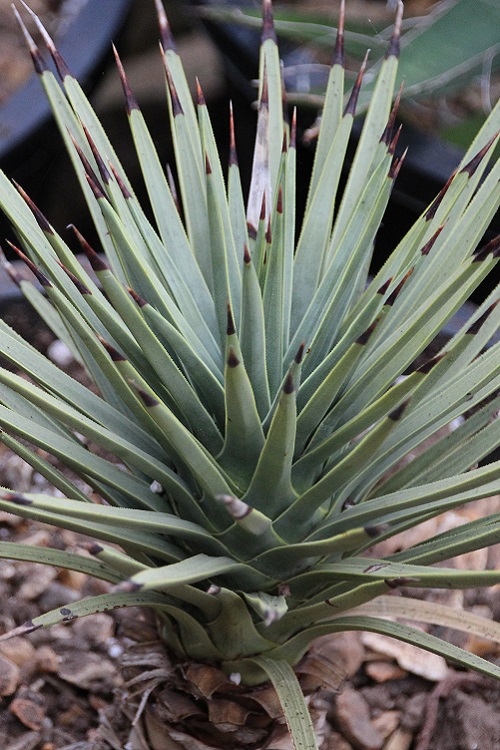
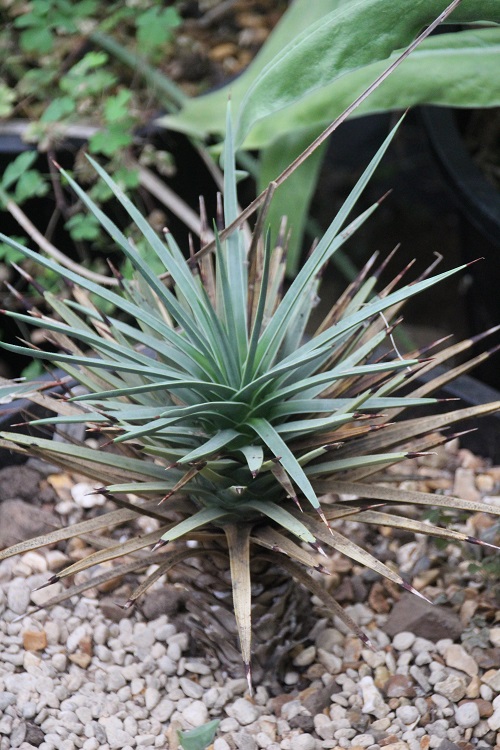
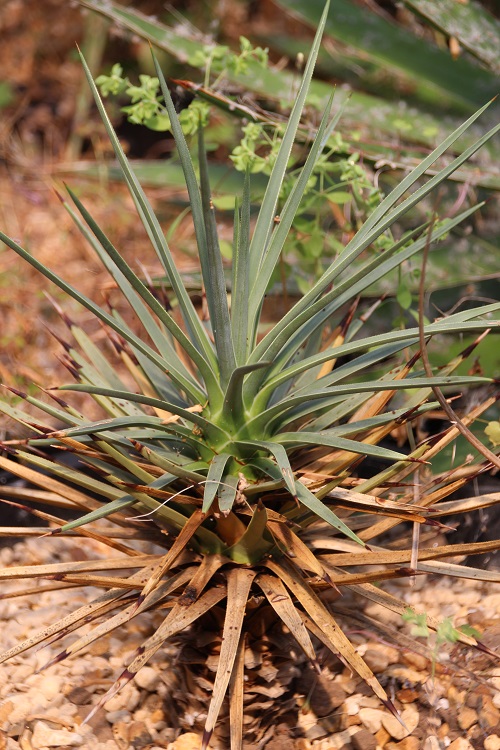
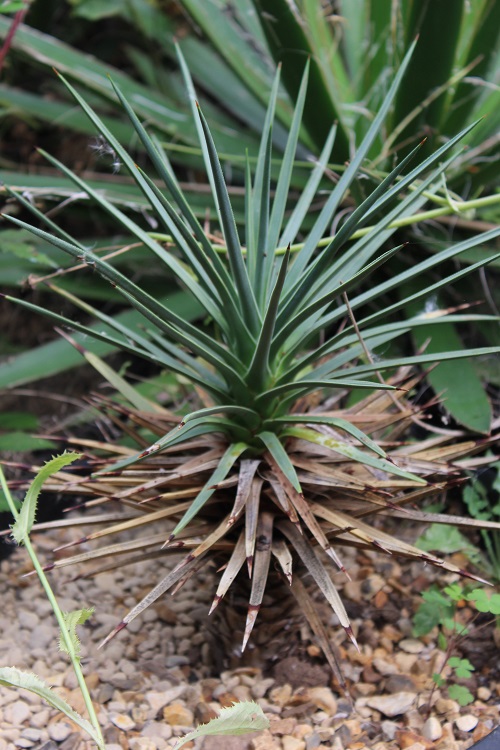
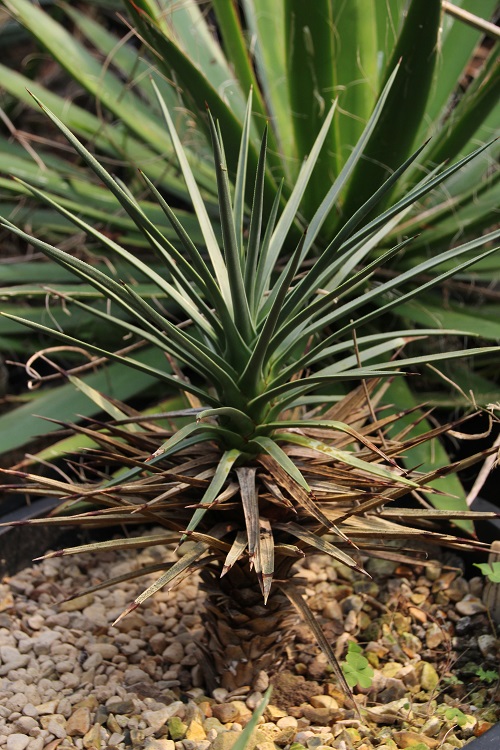
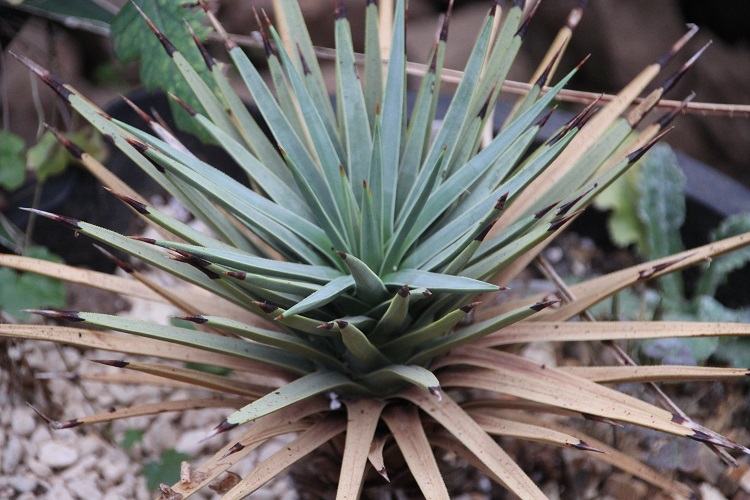
The Joshua Tree is a famous and iconic landmark from the southwestern United States . This is the compact variety with shorter leaves and growing slightly shorter.
Only slightly unfortunately because it only has about seven feet of headroom before I run into trouble. I will deal with that problem
when I have to, until them it is a slow growing delight. Eventually it will become a slow growing delight and a large terminal cutting. The two forms have different growth habits, this one is less inclined to produce a clean trunk than Y. brevifolia var. brevifolia and it has different shaped flowers leading some authorities to treat them distinct species. Horticulture Unlimited say: "This dramatic evergreen has a smaller, stouter trunk than Yucca brevifolia, growing six to twelve feet tall with a denser, more compact branching pattern. It produces multiple stems that start branching two to three feet above the ground. This yucca also has shorter, narrow leaves that appear in tight, terminal rosettes. In spring, the plant develops beautiful, ivory white, bell-shaped blossoms, but does not always flower annually. When the plant does produce blossoms, they are followed by elliptical, greenish-brown, fleshy fruit with black seeds. Use it along tall walls and foundations for its amazing silhouette and graceful appearance. It can also be used in hot, dry, low-water-use situations because it is extremely drought resistant and very heat-tolerant. This plant is native to northeastern California, northeastern Nevada, Utah, and Arizona, where it grows on rocky slopes, hillsides, and plains in very dry locations at elevations of 3,500 to 6,500 feet." NatureServe says: "Yucca brevifolia var. jaegeriana was described in 1938, and considered a distinct taxon through the late 1970s, until J. L. Reveal treated it no longer distinct from the type. Flora North America follows the J. L. Reveal treatment. In 2007, however, it was described as the species level (Lenz 2007a). Eastern Joshua Tree, is an iconic species and near endemic of the Mojave Desert of the southwestern United States, with occurrences in Arizona, California, Nevada, and Utah. It is threatened by fire, drought, climate change, and numerous threats related to habitat loss including off road vehicle use. Yucca jaegeriana is endemic to the United States and occurs primarily within the Mojave Desert including areas of western Arizona, southeastern California, southern Nevada, and extreme southwestern Utah. To the north, the species range falls within the Great Basin Desert and to the east in Sonoran Desert of Arizona. This species overlaps in range with Yucca brevifolia in a small area of Nevada, called the Tikaboo Valley, where the two species hybridize." |
|
| 4th October 2015 | ||