In 1972, Veronica Phipps wrote in the Journal of the Rotal Horticultuural Society:
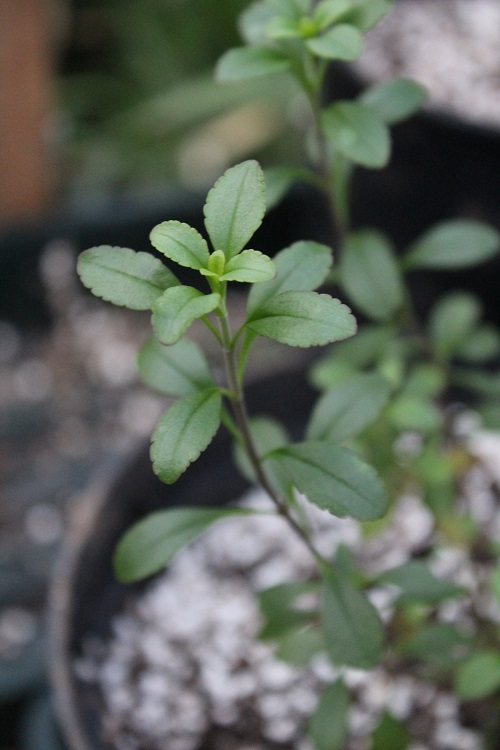
"For several years I have grown Hebe (syn. Veronica) lavaudiana in this chalky north Kent garden and have found it completely hardy and of easy cultivation.
It propagates itself by layers, so that it seems strange that this attractive plant is not more widely grown.
It is related to H. hulkeana, another beautiful Hebe, but not altogether hardy in this country.
Recently I was interested to read in Plants of New Zealand, by R. M. LAING and E. W. BLACKWELL (1940):
"This beautiful little Hebe was one of RAOUL'S discoveries. He named it after LAVAUD. It belongs to the third section of hebes, i.e. those with toothed
and rather fleshy leaves...H. lavaudiana is a rather rare species, being found in only a few localities on Banks Peninsula.
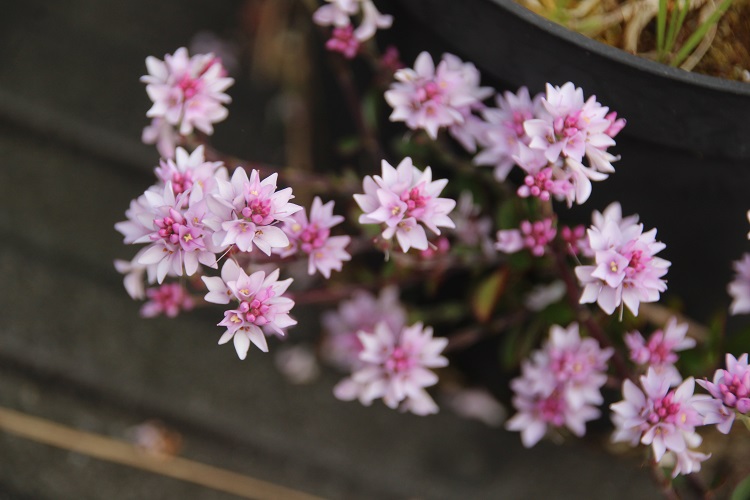
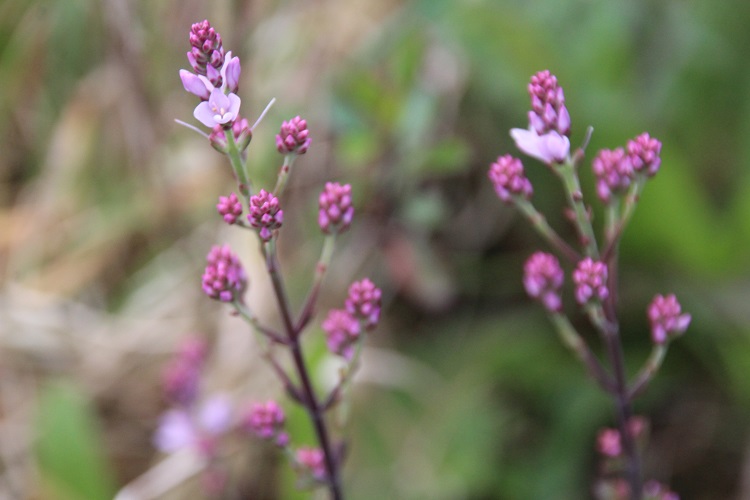
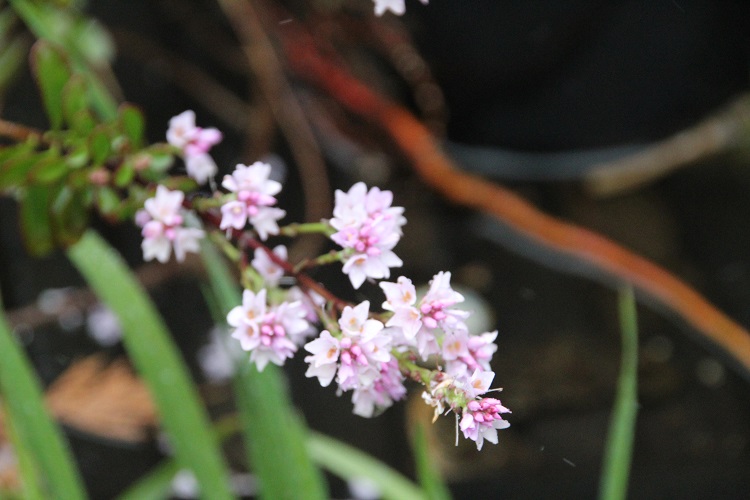
H.lavaudiana bears pink buds, and beautiful white blossoms".
The soil in my garden is light and very quick draining, and the plants are in full sun at the top of a south-west slope where they flower profusely.
Behind them grow Syringa palibiniana and Prunus tenells which, although deciduous, give a little protection from cold north and east winds.
Usually the leaves have a red margin in spring, but last year the characteristic red edges did not show and thre buds were not the usual deep pink
- in fact the plants looked pale.
It would seem that last year's unusually long period of drought was not entirely to their liking and that, like some daphnes,
they appreciate a few stones to ramble through and keep their roots cool and moist.
It would be interesting to know if this hebe is still rare in cultivation and whether it still survives on banks Peninsula in New Zealand, or elsewhere."
Later in the same volume, Margaret Simpson writes from New Zealand:
"Banks Peninsula, which lies a few miles to the east of Lincoln, is essentially the eroded remains of twin basaltic volcanoes, and the higher summits are on the rims of the ancient calderas.
Botanically speaking, the Peninsula is an island with distinctive and endemic species, of which Hebe lavaudiana is one.
An attractive plant at all times, and particularly so when in full flower, it still grows today on all the higher rocky bluffs and summits.
My efforts to collect seed from this species from various localities on Banks Peninsula this year, may be of interest to Fellows.
For H.lavaudiana, DR L. B. MOORE in the Flora of New Zealand (Allan, 1961) gives a flowering time of October to December, and in a general note
referring to the genus, says "Capsules develop quickly and seed is shed not long after corolla fall, but old capsules often remain on the bush
throughout the non-flowering period."
Here in Canturbury an early spring followed a mild winter, during which many spring-flowering plants bloomed erratically.
Therefore I began my search for seed of Hebe lavaudiana as early as January 11, 1972. At that time it was evident that there had been good seed set,
but the capsules were quite immature, with the lobes barely showing above the calyx. To my surprise, on my next visit on February 16, 1972 capsules were still
quite green and far from being fully developed. I was unable to visit the area in March and when I did return on April 27, 1972 the capsules had dehisced and
most of the seed shed. By collecting all available heads into a paper bag I hope to have enough for our requirements.It is evident that at one stage of development and ripening
of the seed and capsule growth is very rapid, but the factors responsible for, or controlling this are unknown."
R. K. Wilson also contributes:
"It is fortunately a plant of rock faces, and has survived in considerable numbers on many sites. Several of these are on Port Hills on which
Christchurch city is gradually extending up the lower slopes. Hebe lavaudiana is nearly always found on the south-facing slopes, at
its lowest around 800 feet, but it grows from there upwards to the tops at about 3,000 feet.
In my own garden about 150 feet above the sea it does grow, but not too happily. The temperature may be warmer than in its native habitat, but more likely the lower rainfall
is the real reason. "
|