 |
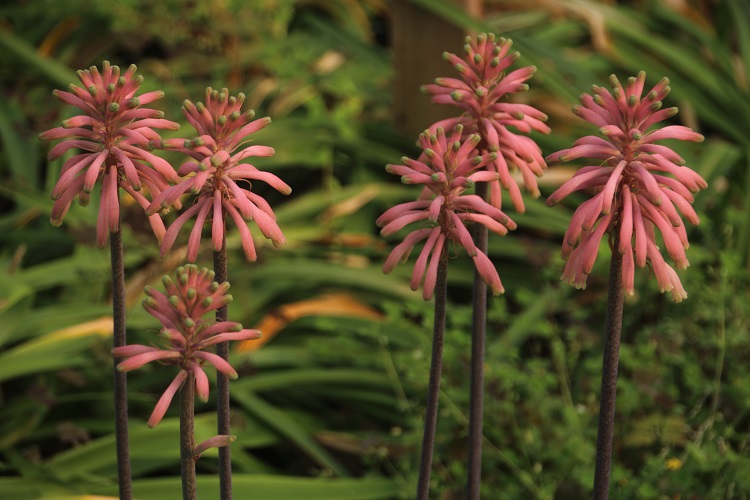
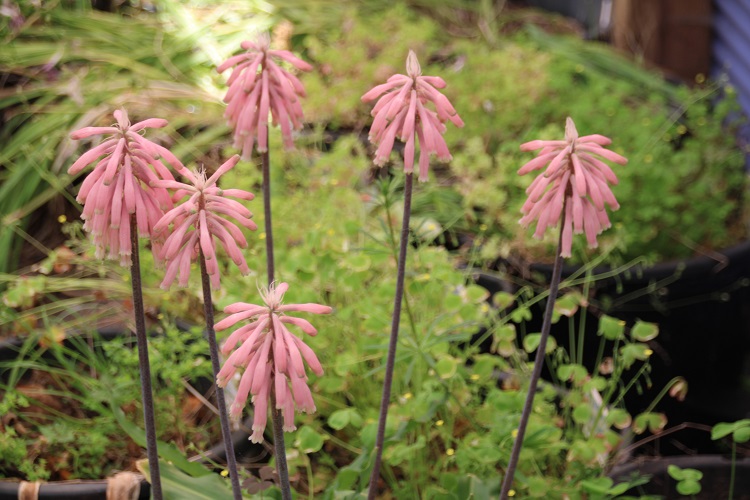
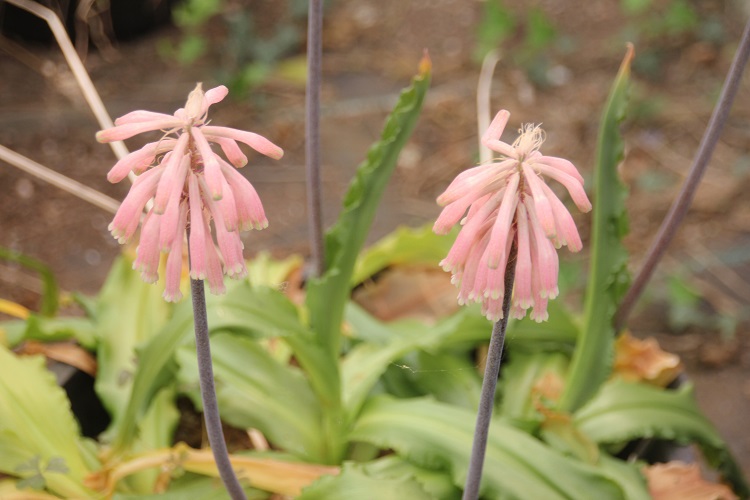
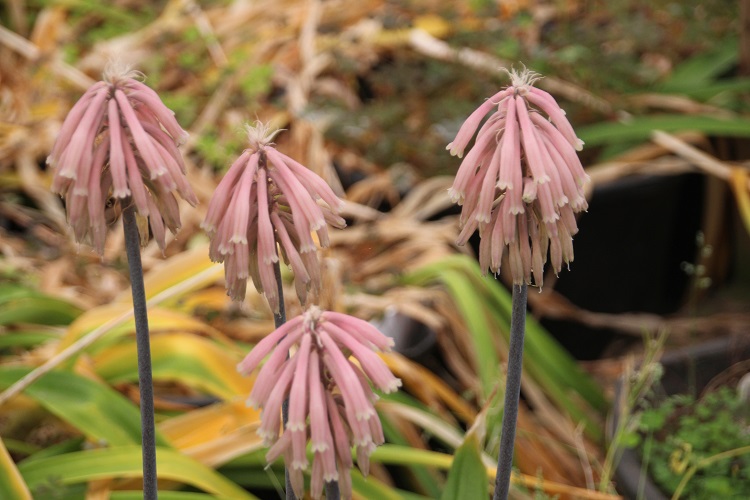
A deciduous bulb, growing through the winter and flowering in late spring. I was given a clump in a pot by na friend and they have grown well among the Nerine,
growing through the late winter and spring and flowering just as the Nerine die down. Writing in JRHS in 1985, John Rooke says: "Veltheimia bracteata is a species of South African bulbous plant that deserves to be more widely known and grown. It is easily grown as a houseplant or in a cool greenhouse: it is able to withstand temperatures down to 14.5degC (40degF) and does not seem to suffer from pesta and diseases. It became my practice while the plant was dormant to store the bulb in its pot in an out of the way corner, or under the greenhouse bench, when in received no attention or water. Towards the end of August a circlet of green appeared at the top of the bulb, indication that growth was starting again." PlantzAfrica says: "Veltheimia bracteata is a winter-growing deciduous bulbous plant, the leaves dying back in summer, and the new leaves appearing in late-summer to autumn, after a short period of dormancy. In frost-free regions that have rainfall throughout the year, Veltheimia bracteata is almost evergreen. The handsome glossy green, fleshy leaves are broadly strap-shaped with crisped or wavy margins and form an approximately 250 mm high by 350 mm wide rosette at the base of the flower stem." San Marcos Growers say: "Veltheimia bracteata comes from a wide area of the Cape area and in Namaqualand where it grows on rocky slopes. The genus, first published in 1771 by German botanist Johann Gottlieb Gleditsch (1714-1786), who honored himself with the naming of the genus of the Locust trees (Gleditsia), was named to honor Count Frederick Augustus von Veltheim (1741-1801) a German patron of Botany. This plant was long called Veltheimia viridifolia (meaning green leaves), a name given the plant in 1797 by the Dutch scientist and medical doctor Nikolaus Joseph von Jacquin, but this species and a plant called Veltheimia undulata was subsumed into Veltheimia bracteata as described by William Harvey in 1871." |
|
| 11th May 2018 | ||