 |
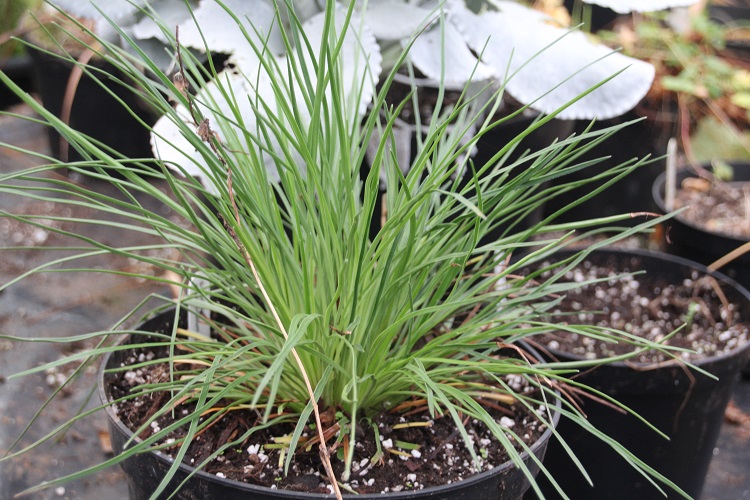
A small growing plant that suddenly appeared in garden centres across the country. For a while I saw it in every garden I visited but it seems to have disappeared now.
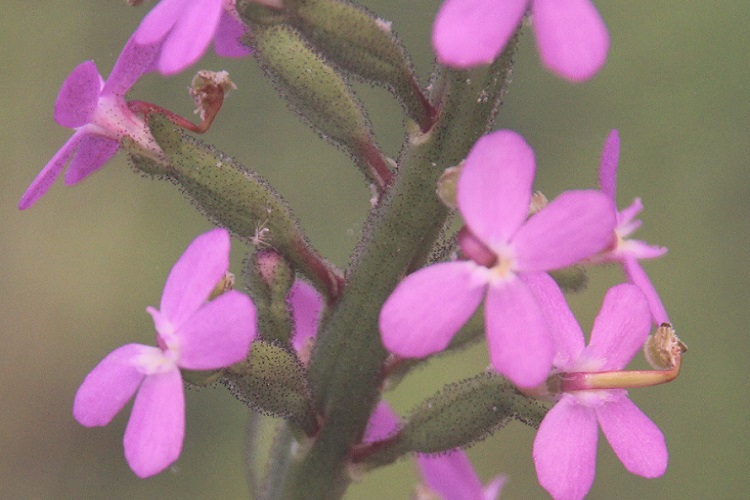
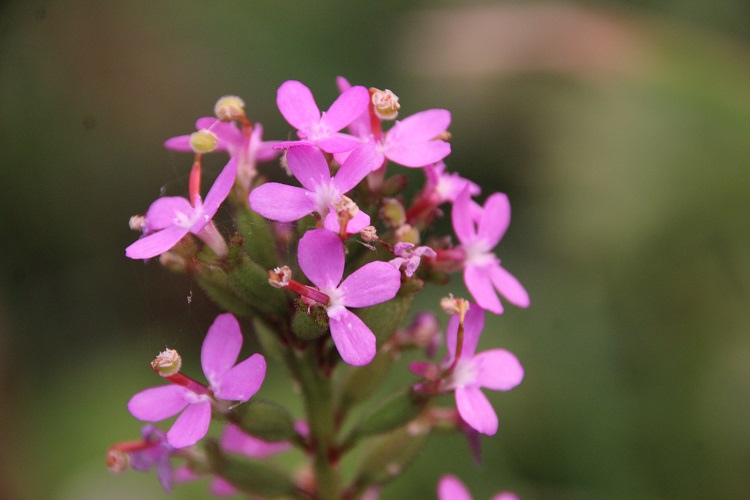
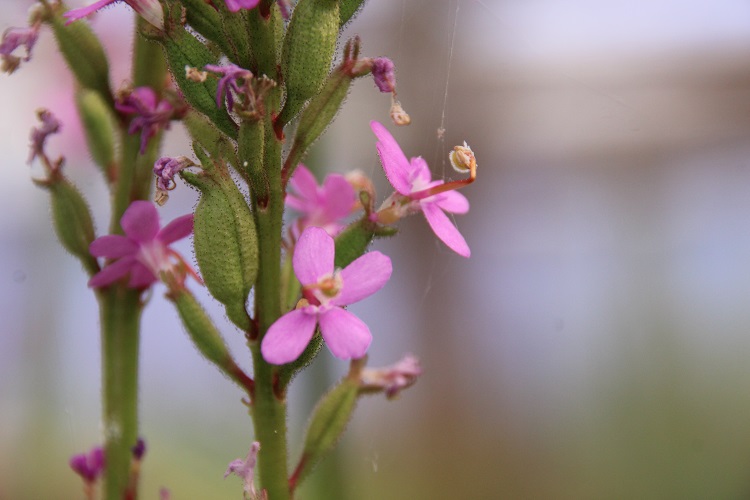
It was said to be tolerably (slightly) hardy and came through the winter withoput trouble in the greenhouse, however it resented my attempts to divide it in the spring. Douglas Darnowski says: "The Grass Triggerplant is probably the best known triggerplant, since it has one of the widest geographic ranges in the genus, being found in Tasmania, Victoria, New South Wales and Soth Australia. There is considerable variation of height and a variety of other features within this species, and taxonomists are currently trying to unravel what they call the Stylidium graminifolium complex to yield a greater number of species, each with coinsistent characteristics throughout its individual range. Taken togeter, Grass Triggerplants are scale leaved plants with deep pink flowers, having entire, or smooth, margins to their petals. The depth of the pink colour, the form of the petal edges, and the height to 60cm in flower can be used to distinguish this species in eastern woodlands from the related S. productum." Writing in The Plantsman in 1992, Jeffrey Irons says: "The family Stylidaceae is well known because of the way in which its members ensure that their flowers are fertilised. The stamens are on an irritable column. When the base of the column is touched, it jerks up, and the anthers shower the visiting insect (which 'triggered' the column) with pollen. When the stigma is mature, its receptive surface comes into contact with pollen collected from a younger flower. The family reaches its greatest development in Western Australia, and only one species can be considered hardy in Britain. Stylidium graminifolium is found in all the eastern States of Australia, in habitats varying from sea level to alpine. The high level forms occur in herbfields and bogs, and are hardy in Britain. The grass like leaves are tufted, in a basal rosette, and up to 40cm long - though usually much less. Australian literature gives the height of the flower scape as 20 - 30cm, but plants from wild collected alpine seed have given scapes up to 80cm high when grown outdoors in Britain. The upper half of the scape carries a spike-like raceme of two lobed flowers. They are usually purple to pink in colour, but can be white. Flowering occurs in the second year from seed. Cultivation is easy in moist soil which does not dry out. Flowering takes place between June and September. Propagation is from seed." |
|
| 2nd December 2017 | ||