 |
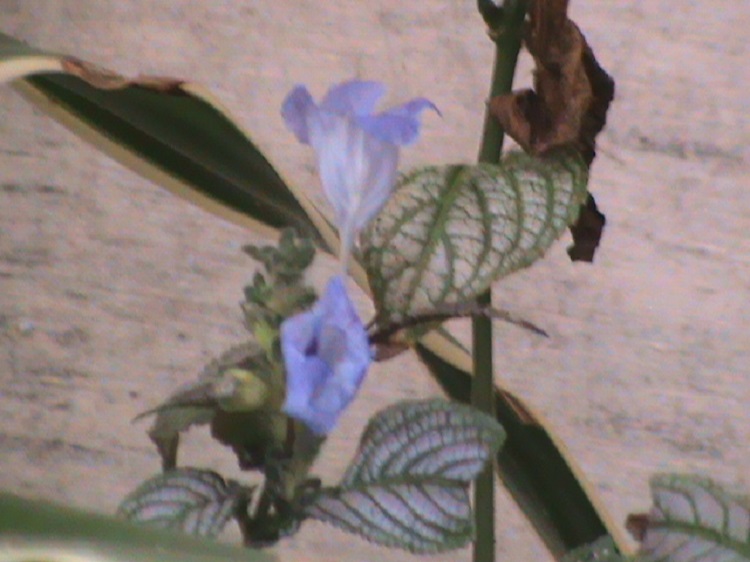
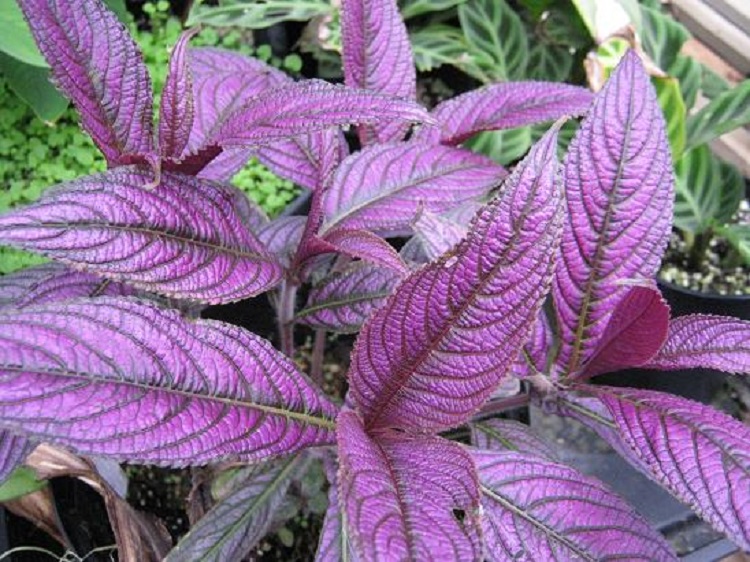
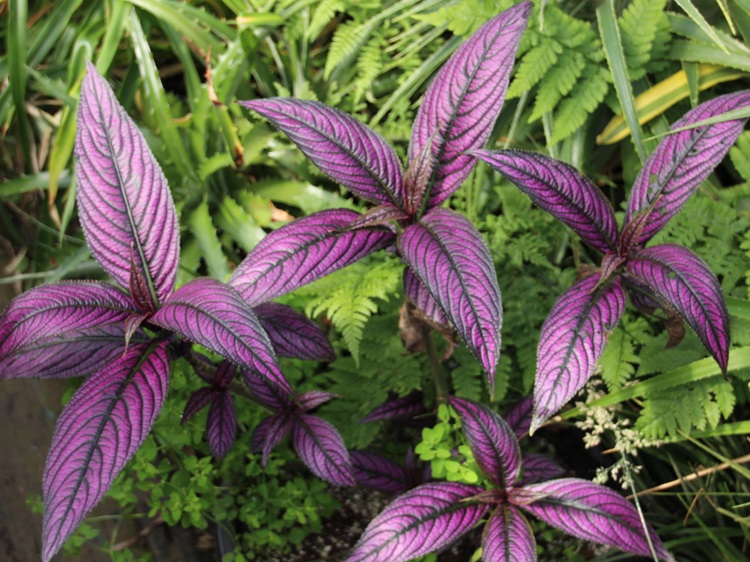
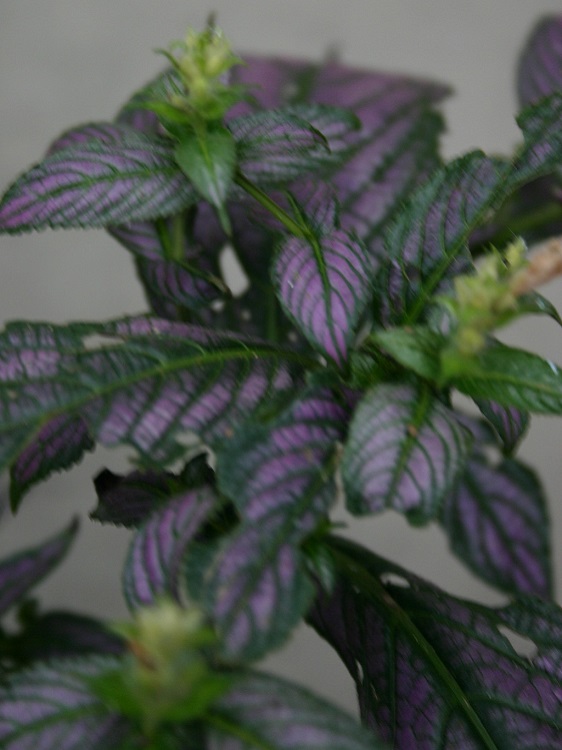
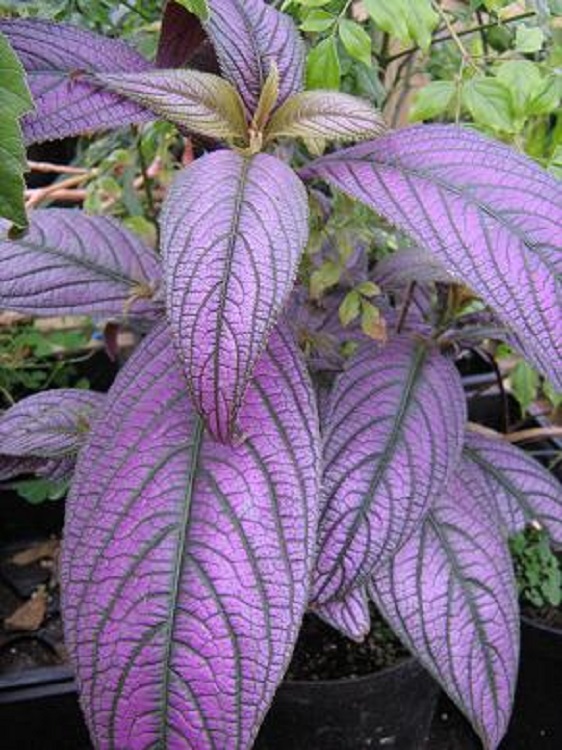
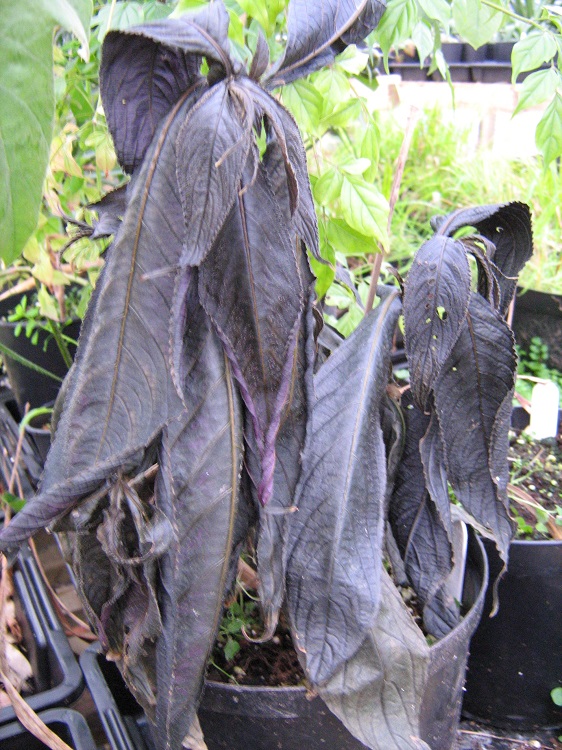
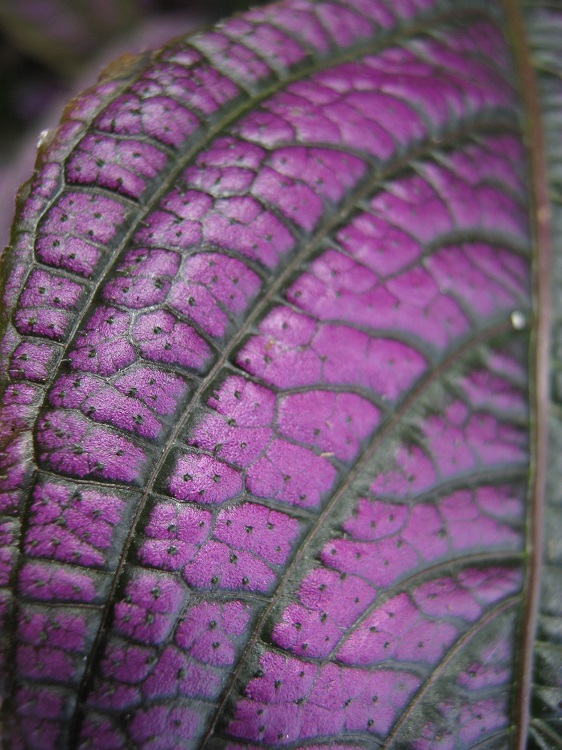
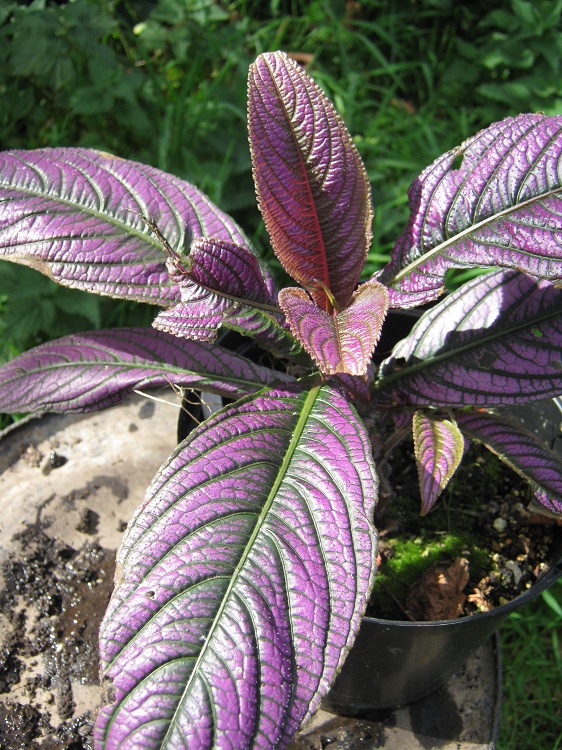
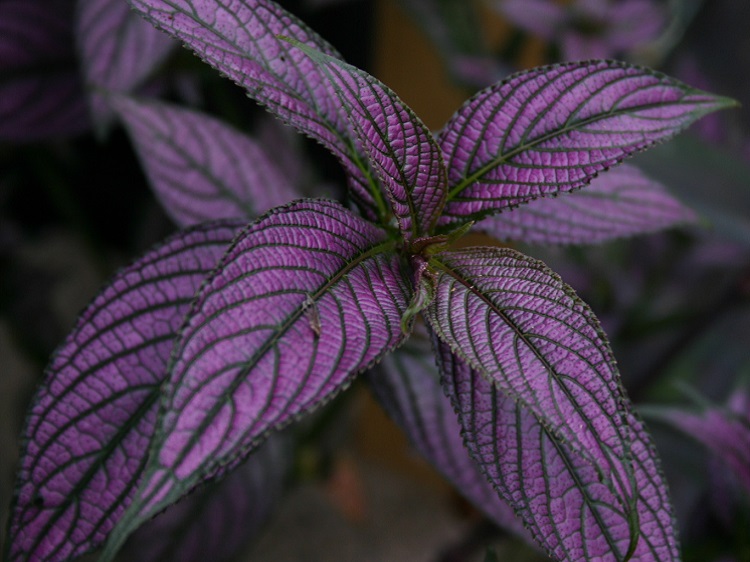
The shining purple leaves are astonishing. The plants grow old and twiggy quite rapidly, and then the leaf size reduces, so it is well worth propagating it regularly. It can get 'toasted' in the greenhouse over winter and I am amazed that it recovers, but we have had two bad winters, and it is still bouncing back and seems to be cheerful. I have never seen it doing the same outside, but I suspect it needs the warmth of the greenhouse to breathe life back into it, and allow enough growth before the winter comes again. I have flowered it several times but never managed to get a decent picture. In the Journal of the Royal Horticultural Society, Ann Bonar wrote in 1980: "As a native of Malaysia, Strobilanthes dyerianus requires a minimum temperature of 10degC (50degF), and plenty of water during summer; if kept dry it is prone to greenfly infestation. It also needs to be kept in good light - but out of direst sun in summer - to maintain the leaf colouring. However, as light can be inadequate in British winters, it is better to renew the plant from easily rooted tip cuttings taken in spring with bottom heat." Plants of the World online has redced the species to S. auriculata var. dyeriana and says: "The native range of this variety is Bangladesh to Thailand. It is a subshrub or shrub and grows primarily in the wet tropical biome." The Missouri Botanic Garden website says: "It is a soft-stemmed, tropical, evergreen shrub or subshrub that is grown primarily for its attractive iridescent purple foliage. It grows 3-4’ tall in frost-free climates, but typically grows 1-3’ in the St. Louis area. Features ovate-lanceolate dark green leaves (to 8” long) that are flushed with silvery-purple iridescence above and dark purple beneath. Spikes of tiny violet 5-lobed funnel-shaped flowers usually do not bloom during the St. Louis growing season, but infrequently may be seen on overwintered plants in greenhouses. Flowers appear in short cone-shaped inflorescences, thus giving rise to the less frequently used common name of Burmuda conehead. " |
|
| 1st October 2006 | ||