 |
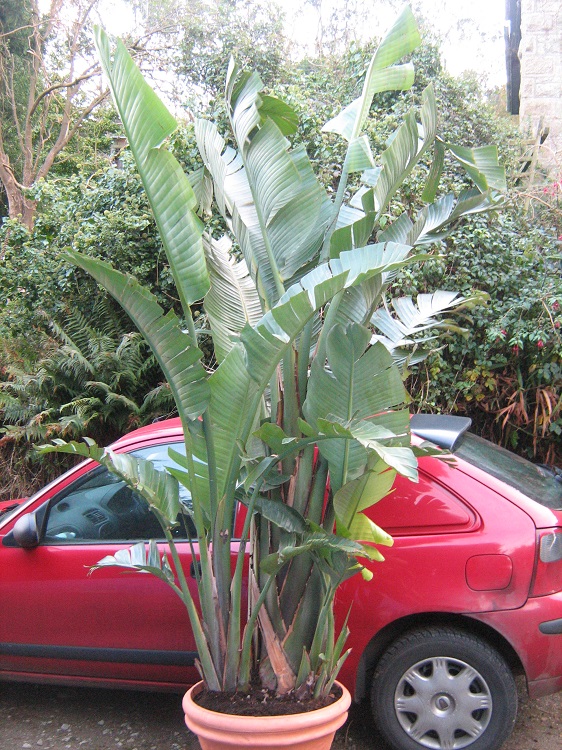
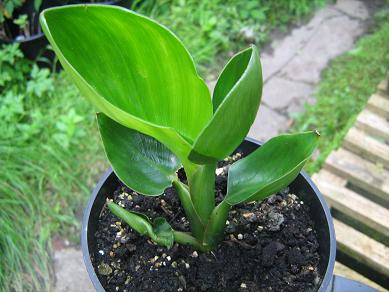
I have a small seedling of the largest growing Strelitzia because I have heard that it may be one of the hardier species (from someone who knows about these
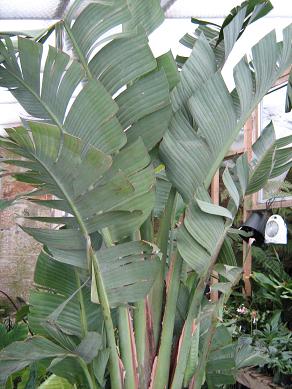
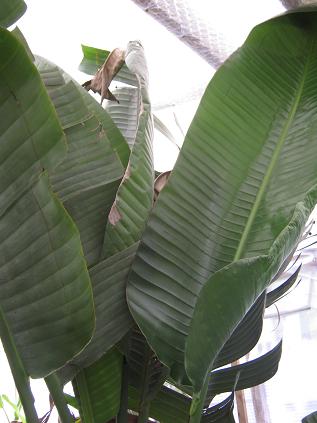
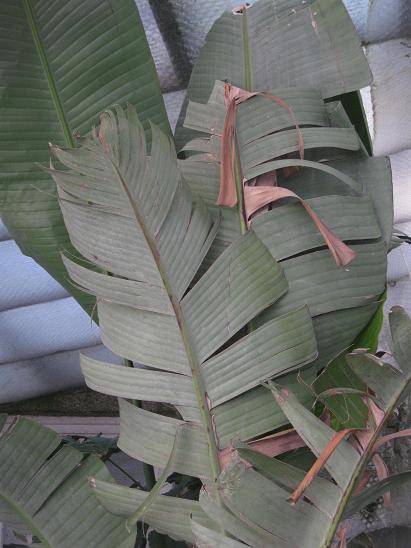
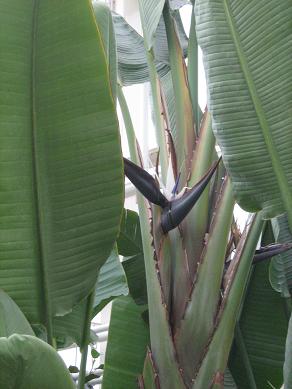
things rather than just talks about them). I was resigned to a long wait. Then suddenly in a rush to clear stock before the winter struck, my local garden centre reduced the price of this one to a sufficiently ridiculous level for me to try the the equally ridiculous task of fitting it into my car and driving off with it. Standing in a large space, I was sure it would fit under the roof of the conservatory. I was right, I had an inch to spare! Came through the winter of 2008-9 in the conservatory. It wasn't happy, but it came through. It did not survive the following winter, cold weather in March 2010 reduced it to pulp. Plantzafrica says: "The Natal wild banana grows mostly in coastal dune vegetation and in evergreen forests near the coast. It is a common feature of the coastal vegetation from East London northwards. It grows in the Eastern Cape, KwaZulu-Natal and up into Mozambique towards Zimbabwe. The name Strelitzia was given to honour Queen Charlotte, the wife of King George III of England. She was from the house of Mecklenburg-Strelitz. There has been some confusion over which Nicholas the specific epiphet honours, but original description in Garden flora states that the name nicolai is in honour of Grand duke Nikolai Nikolaievich the elder, third son of Czar Nicholas I of Russia, and not for the Czar. Leaf stalks are dried and used to make a rope for building fish kraals and huts. The immature seeds are edible and tasty. The Natal wild banana is fairly drought tolerant, but it does not tolerate severe frost, so plant it in a protected spot inland. It withstands salty coastal winds, making it a good feature plant or screen for coastal gardens. Strelitzia nicolai is an eyecatching evergreen, effective throughout the year and is useful for creating a lush, tropical effect. It can be used to offset hard landscaping, buildings and pools etc. It also looks good contrasted with evergreen lawns and shrubs. The root system is aggressive,however, so don't plant it too close to structures and paths. Surprisingly it will even survive it a large pot for several years, and this may be the best way to grow it if you have a patio or small garden." |
|
| 7th September 2008 | ||