 |
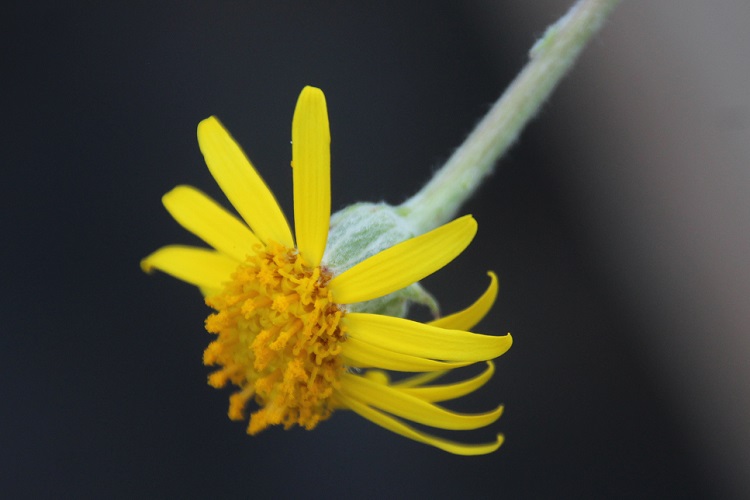
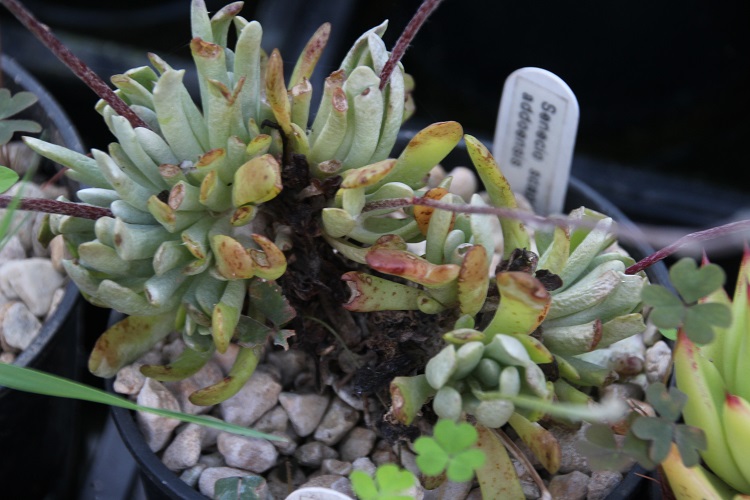
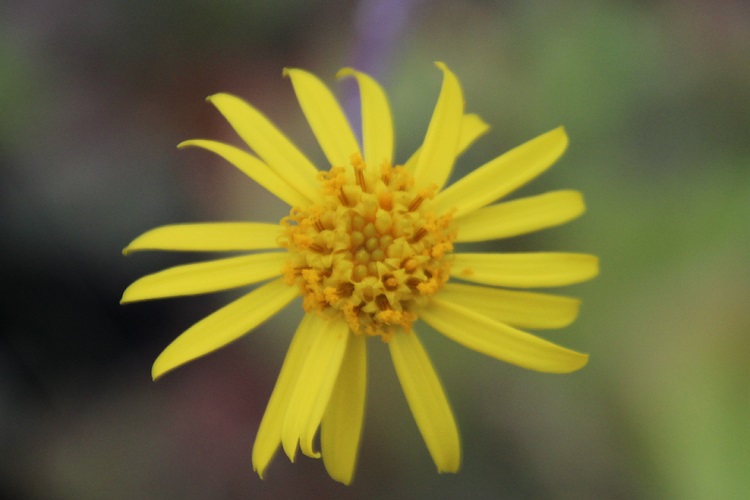
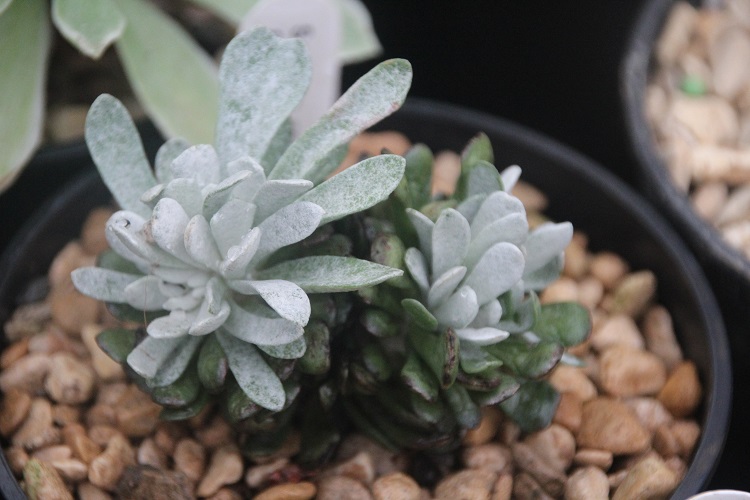
A small growing, tough succulent from the mountains of Cape Province, South Africa. Silvery leaves
and yellow daisy flowers in summer. (Recent studies of the genus Senecio have resulted in this being moved to the genus Caputia). Plants of the World online gives the distribution as: "The native range of this variety is Cape Prov." The Llifle encyclopedia of living forms says: "Senecio scaposus var. addoensis is endemic to the Uitenhage District in the Eastern Cape, Republic of South Africa. It is restricted to an area of about 200 km², known from two locations (Addo Elephant National Park and Port Elizabeth). S. scaposus var. addoensis dwells on shallow soil among sandstone rocks over a east-facing rock mountainside. This taxon is declining due to trampling by people in the Baakens Valley in Port Elizabeth. There is also ongoing expansion of suburban residential areas in the Glen Hurd area, which is further reducing the available habitat. In the Baakens River Valley, a large subpopulation of between 1000 and 2000 plants is restricted to a rocky outcrop of about 1 500 m². Plants grow in an area rich in other succulents. The status of the population in the Addo Elephant National Park is not known." World of Succulents says: "Caputia scaposa var. addoensis, formerly known as Senecio scaposus var. addoensis, is a succulent plant with fleshy flat leaves with lobed, triangular to spoon-shaped tips. It forms a small clump in time. The young leaves have a white to silvery tomentum that may be shed as they age. This covering serves to reflect the sunlight, preventing overheating or burning." |
|
| 8th December 2018 | ||