 |
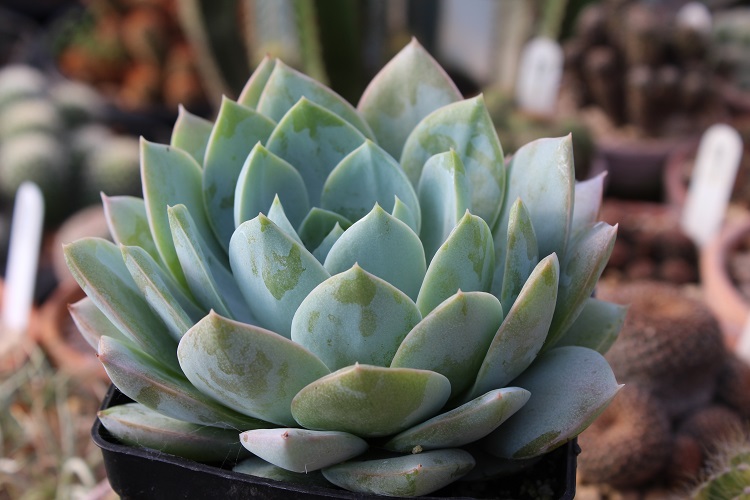
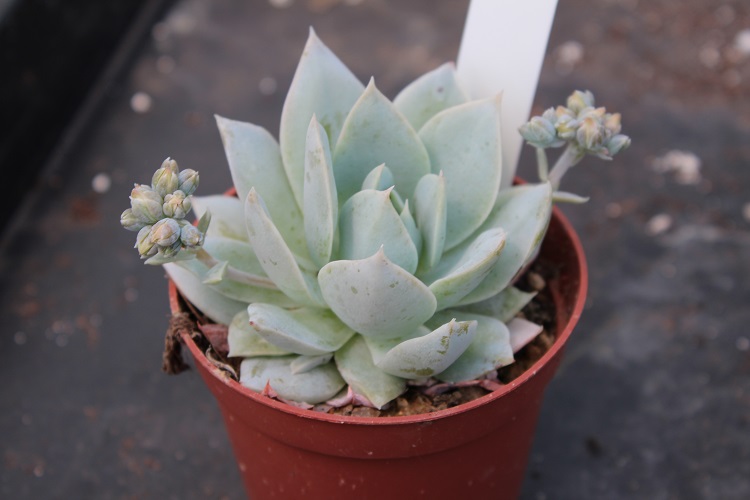
A tidy growing rosetted Sedum from Mexico that looks much like an Echeveria. It has been completely cold-resistant for me in the greenhouse
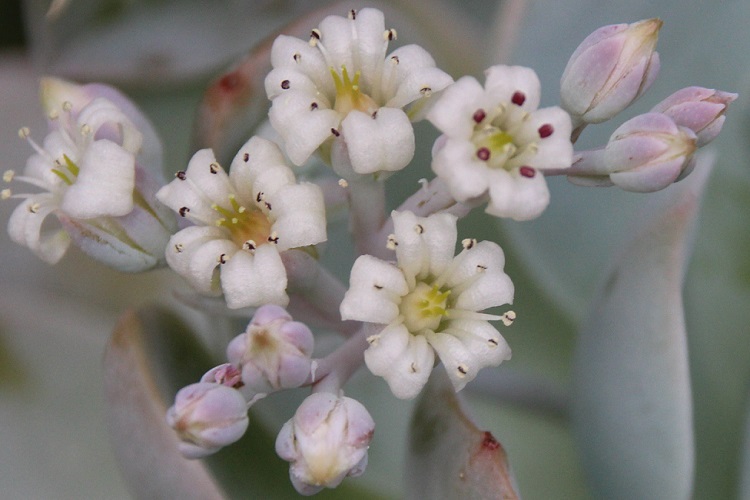
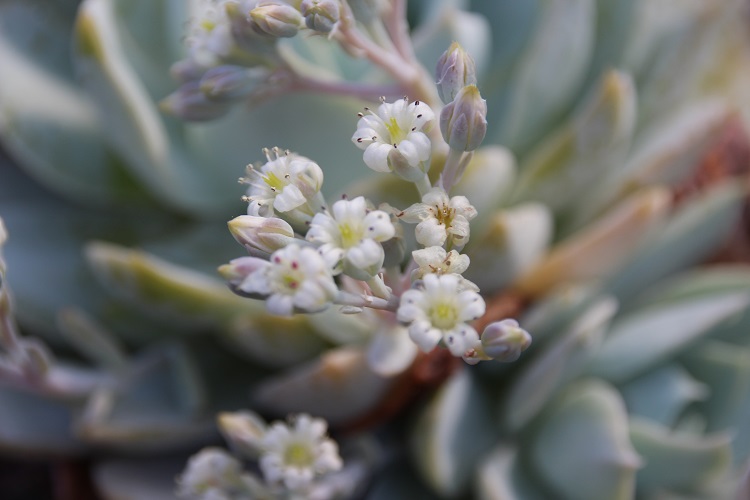
but would probably not stand winter wet outside. Plants of the World online says: "The native range of this species is Mexico (Durango). It is a succulent subshrub and grows primarily in the desert or dry shrubland biome." The International Crassulaceae Network says that it grows on shaded cliff faces in Durango and that it can grow to 50cm in diameter. San Marcos Growers say: "Sedum suaveolens (Sweet Smelling Sedum) - Clumping plant to 18 inches tall and wide with 6 to 8 inch wide rosettes of glaucous blue-green to alabaster white leaves, often tinged pink with a flattened upper surface, keeled below and slightly upcurving towards the tip. From within the rosette emerges stolons from which new rosettes form, eventually creating a tightly packed mound. Like the stolons, a short inflorescence, barely reaching beyond the edge of the leaves, emerges from within the rosette, bearing sweetly fragrant white flowers. Plant in morning sun to bright shade in a well-drained soil and irrigate occasionally in the summer but keep as dry as possible in winter months. This plant has wintered outdoors at the Huntington in a shade house with nighttime temperatures around 26F. This is an interesting and beautiful plant that cannot be confused with any other Sedum, but is a bit hard to tell from Echeveria elegans when not in bloom. It was discovered in January 1976 by Myron Kimnach of the Huntington Botanic Garden and Hernando Sánchez Mejorada of the University of Mexico along a narrow river canyon in the western Sierra Madre Occidental Mountain at 3,800 feet 2 miles south of Topia in Durango where it grew with orchids, Hylocereus purpusii, Agave angustifolia, Sedum semiteres, and thickets Yushania aztecorum and Chamaedorea pochutlensis where they described this plant as "echeveria-like plants, their pure white rosettes growing singly or in clusters to two feet wide". They were able to dislodge plants of seven separate clones and in June of the same year one flowered in the greenhouse, allowing the determination that the plant was in fact an entirely new species of Sedum. A single clone was selected by the Huntington and this plant was distributed in 1978 through the International Succulent Institute (ISI) as ISI 1,100. It has been noted that this Sedum is unlike all others - not only are the leaves in rosettes more like Echeverria, but it has other anomalous characteristics including extremely short flowering-stems with the white fragrant flowers in dense clusters. It also has an extremely high chromosome count of 2n=circa 640, which at the time of its discovery was the highest chromosome count known for a plant. It is most closely related to Sedum craigii, which itself is considered quite un-Sedum-like. The specific epithet is Latin for "sweet smelling"." |
|
| 9th May 2015 | ||